
Meet our Auto Batch Doser. A system by growers, for growers.
Mixing a batch tank by hand eats your time, and it's where mistakes creep in. Grab the wrong bottle, lose count halfway through, and the whole tank is off. Get it wrong often enough and you're chasing salt build-up and clogged drippers too.
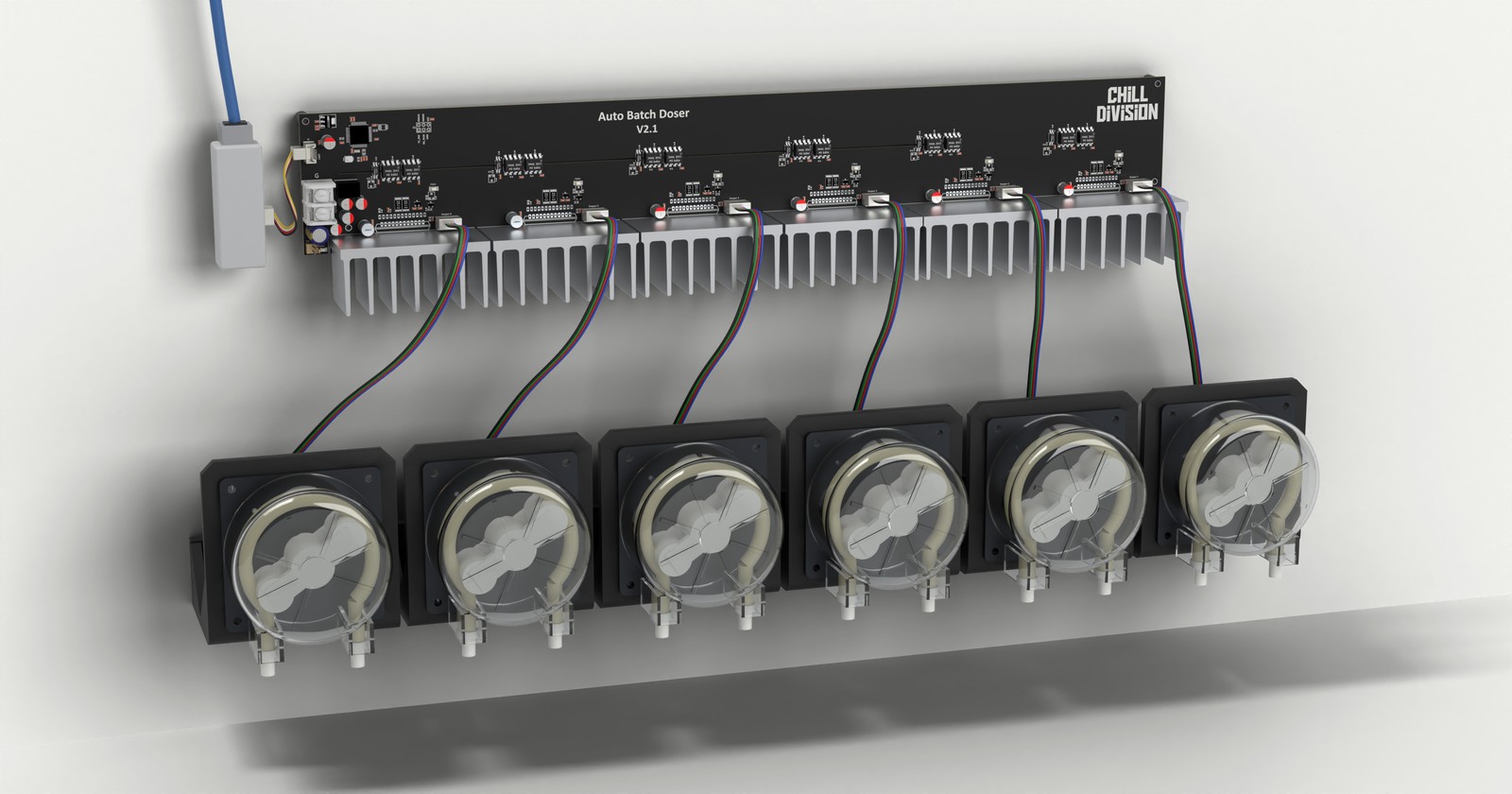
So we automated it. Meet the Auto Batch Doser. One board, six stepper motor peristaltic pumps, and every pump calibrated to dose at exactly 600 mL a minute.
600 mL a minute is 10 mL a second
That number is the whole trick. 600 mL a minute is 10 mL every second, so once a pump is calibrated, every dose is maths you can do in your head.
| You want | Run the pump for |
|---|---|
| 10 mL | 1 second |
| 50 mL | 5 seconds |
| 150 mL | 15 seconds |
| 300 mL | 30 seconds |
Mixing 150 L at 2 mL per litre? That's 300 mL, so 30 seconds. No measuring jugs, no syringes, no sticky bench.
Even easier than remembering, though, is having our PHASE Control system handle it for you, and it defaults to the numbers for our Auto Batch Doser system so that everything is super streamlined.
The pumps run on stepper motors, so the speed doesn't wander. They're the same kind of motor used in 3D printers, with accuracy down to under 0.1 mm. Same frequency in, same flow out.
Calibrating takes a minute, literally
Every pump has its own Calibrate button in Home Assistant. Pop the pump's outlet hose into a 1 L jug, push the button, and it runs for exactly 60 seconds, so there's nothing to time.
See how much came out, then put that and the pump's current Motor Speed into our Pump Frequency Calculator. It gives you the new speed for a perfect 600 mL. Run it once more to check, and you're done.
Two tips:
- Prime the hoses first, or that first reading will come up short.
- Recalibrate when a stock tank changes, whether it's a refill or a different nutrient.
Six pumps, built to last
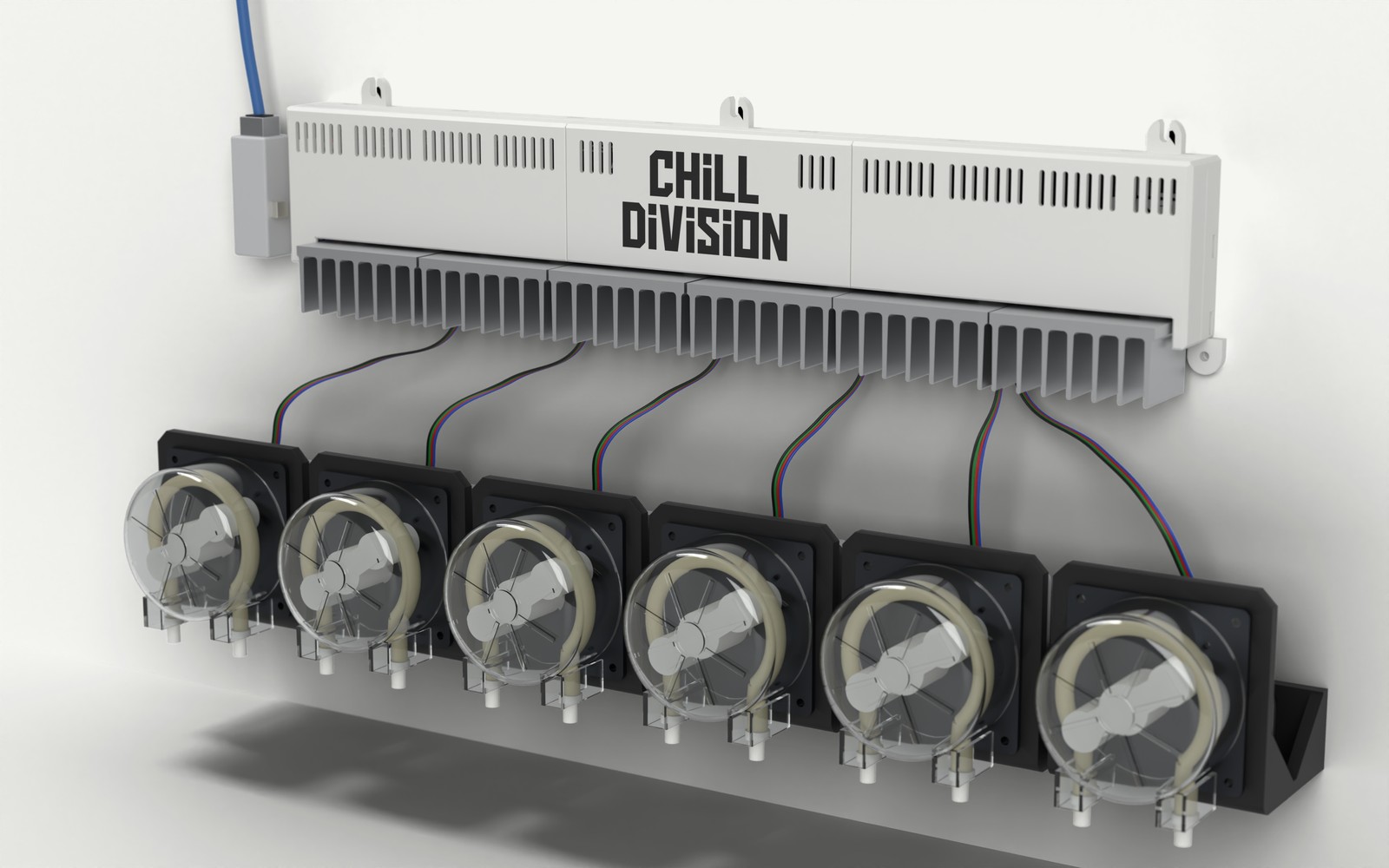
We picked the Pengpu P500 because it's a proper stepper motor pump, made for reliable, repeatable dosing, with plenty of torque.
- Six of them, so a full six-part nutrient lineup runs without ever swapping bottles.
- PharMed BPT tubing. Pengpu rates it at about 1,000 hours of pumping, against about 200 hours for the silicone version of the same pump. If this is for a standard Athena Pro Line feed schedule, they'll last around 6,000,000 litres of feed. That's the equivalent of 120+ grow cycles, or around 20 years' worth for the majority of the growers we know.
- Quick-swap pump heads. When a head wears out, you replace the head, not the whole pump. There's a spare head in the box, plus a whole spare seventh pump with its own mount, so a worn head never holds up your next batch.
- Our own brackets. Each pump sits in one of our 3D-printed brackets, in black ABS-FR. They screw to the wall a little above the bench, with the hoses facing down.
Fully plug and play
There's nothing to solder, and nothing to flash.
- Every pump plugs straight into the board, no soldering wires, in keeping with the plug and play ethos.
- The brains is an M5Stack Unit PoE-P4, pre-flashed with ESPHome. It runs on Power over Ethernet, so one cable gives it power and a network connection, and a Grove cable links it to the board.
- A 24 V DC supply runs the pumps. 1.5 A is plenty for dosing one pump at a time, which is what we recommend. Want all six running at once? Go for 8 A.
- The board goes on the wall in our own clip-together case, above your pumps.
Right at home in Home Assistant
Plug it in, and Home Assistant finds it by itself. Add it under Settings → Devices & services, and each of the six pumps gets its own Speed, Calibrate, Power and Direction controls.
Direction works both ways, so the intake can go on whichever side of the pump suits your plumbing.
Want to tinker? Take control of it in the ESPHome Device Builder and make it your own. The whole config is open on GitHub.
Made for PHASE Control
PHASE Control is our free, open-source crop steering system for Home Assistant. There's a lot more to say about it, and that's in its own post.
It also looks after your batch tank. Map each pump's Power switch, your solenoids and your level sensor under Settings → Rooms & hardware → Reservoir & dosers, then set up your feed recipes under Feed → Recipes. From then on, refills look after themselves. The tank fills, each nutrient goes in turn, and it all gets mixed.
And this is where 10 mL a second really pays off. PHASE Control works out how long to run each pump straight from the dose in your recipe, assuming 600 mL a minute. That's why the calibration matters.
If you don't have PHASE Control yet, it's free on GitHub.
Get in touch
Still mixing your batch tank by hand? Get in touch or flick us a message on Instagram, and we'll talk you through it.